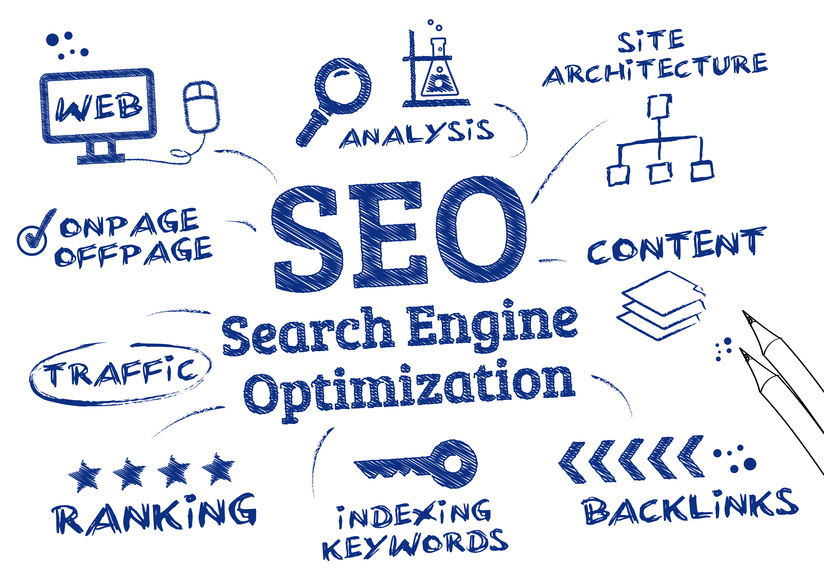
 On-site is the type of search engine optimization most people think of when they are first learning about SEO techniques. This type of SEO refers to the direct edits you can make to your website that influences how your site behaves or is found on search engines.
Onsite SEO is the process of making your website search engine friendly. In simple words, this means adjusting certain elements on your website so that search engines are able to crawl and understand the content and structure of your website. The more information and data they can get from your site, the greater are your chances of ranking higher in their index.
On-Site Elements:
1. Title Tag and Meta Tags
Meta tags help describe the page where they are placed. Though today the Meta tags are not nearly as important as they once were and are definitely not the only things the search engines look for when indexing your site, they are still somewhat important in deciding the relevancy of the page for a keyword search.
Search engines focus on three primary tags to help them determine the relevance of a website for a particular search phrase. The Title Tag, Meta Keywords, and the Meta Description.
Ideally, the title tags should contain less than 64 characters with your most important keywords in them and should definitely be relevant to the content on the page. Do not stuff keywords into the title tag!
The Meta description tag is a summary of the page and its contents. This Meta tag should be 200 characters or less and should contain keywords and phrases you hope to be found for, but it should also read like an introductory lead-in for the page and be appealing to the reader. The description you provide for your page has to convince the visitor that they have found exactly what they were looking for.
Probably the least important Meta tag to search engines is the keyword tag. However, it shouldn’t be ignored. Keyword tags should be less than 1000 characters. This tag should include important keywords and phrases consistent with the body text, title, and content of the page. Be specific and accurate with the keywords and key phrases in this tag. Again, do not stuff keywords here, they should only be those that are actually on the page and do not repeat any word more than 3 times.
2. Heading Tags
The heading tags are given more weight than the ordinary text. The higher the H tag the more weight it carries. You should make use of the heading tags to highlight the important keywords and headings of your page as well as the paragraph headers.
3. Bold Text
Bold text is given a little more weight than ordinary text but not as much as heading tags. Make sure to enclose some of your keywords in bold tags when they appear on the page.
4. Alt Text
The alt tag provides alternative text when images cannot be displayed. This might happen if the users have set the browsers only to download the text and not the graphics, or if the images are too heavy to download for the user’s internet connection. Only include important keywords relevant to your site and the image and do not stuff keywords in them.
What is Off-site SEO?
Off-site SEO focuses on activities that help to improve the traffic going to your website. Take link building for example. Building links still remain one of the most important ranking factors in Google. Understanding how backlinks play a major role in getting your website to rank well in a search engine can provide you with a major advantage over your competitors.
Off-site SEO involves support of your blog or website from outside and external elements. This includes anything that is done on your site or through social media. Some off-site SEO elements include back-linking, inbound linking, article directory submissions, commenting on other blogs, marketing your posts on social media, RSS feeds, paid linking, trackbacks or pingbacks and press releases.
Off-site SEO is ultimately the key role in driving traffic to a website and popularizing a blog. You’ll need to spend time building your social networking following on Facebook and Twitter. You will also need to encourage others to link back to you, through building relationships and promoting your content.
Off-site elements:
1. Link Text
This is a very important factor in search engine optimization to gain higher rankings. The link text can be on pages on your site or what other websites use to link to you. Either way, it is important. If possible the target page’s main search term should be included in the link text instead of just the URL. Do not use identical link text for every link, but do include the target page’s main keywords in the link text. Links carry more weight when the text around them is relevant to the target page’s keywords and phrases.
Following the above SEO information will help tremendously in your search engine rankings. Remember that the search engines are advancing all the time. Don’t try to trick them because they will eventually catch on and that could mean the end of your website. Stick to the basic techniques above and you will increase your search engine rankings without fear of being banned or dropped.
SEO Vancouver offer these services:
1. WEBSITE DESIGN
2. SEO (SEARCH ENGINE OPTIMIZING)
3. SEM MARKETING (PAY-PER-CLICK)
4. VIDEOS
5. CONTENT WRITING
Visit us at seo-vancouver.ca or feel free to give us call for a free consultation of your business and advice at 604-704-1332.
Leave a Comment
You must be logged in to post a comment.